
Inflation trajectory, domestically as also globally, is what will shape the economy, and therefore the market, over the next couple of quarters.'

Industry players credit Sebi's first woman chairperson with putting special emphasis on cyber security, use of tech and data, areas where Sebi is trying to 'stay ahead of the curve'.

The Securities and Exchange Board of India (Sebi) could soon issue interim orders imposing a market ban on the two former fund managers of Axis Mutual Fund (MF) for suspected front-running of trades, said people with knowledge of the development. "The market regulator has gathered prima facie evidence that demonstrates that the duo has violated the integrity of the market. "While a detailed investigation is still pending in the matter, Sebi could take action under Section 11 (4) to prevent further harm to the investors and the securities market," said a source.

A strong performance by sectors including banking raised the profits of Indian companies by 28 per cent in the three months ended March 2022. The rate of growth is, however, lower than the 30 per cent seen in December. Growth in net sales was also lower than what was seen in the December quarter for the sample under consideration.

Overseas investors, as well as other key stakeholders, such as brokers, custodians, and clearing corporations, are yet to iron out critical issues, even as the shift towards a shorter trade settlement cycle approaches new phases. Several industry players said foreign portfolio investors (FPIs) are still facing impediments over the trade confirmation timelines, foreign exchange (forex) bookings, and pre-funding requirements. This could potentially act as a roadblock when it comes to moving entirely to the new T+1 settlement cycle from next year.

Tata Sons, India's biggest promoter in the private sector, is expected to earn a record Rs 27,797 crore via equity dividend and proceeds through share buyback from its listed group companies for the financial year 2021-22. This amount is up 17.6 per cent from Rs 23,663 crore that it pocketed in FY21. Nearly two-thirds of these proceeds will show up in Tata Sons' financial results for FY22, thanks to the quarterly interim dividend by its cash cow Tata Consultancy Services (TCS).
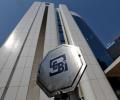
Markets regulator Securities and Exchange Board of India (Sebi) is examining allegations of front-running and other irregularities against a host of domestic fund managers across the asset management industry, said people in the know. Developments at Axis Mutual Fund have prompted the regulator to speed up probe to ensure that there is no drop in confidence in the Rs 39-trillion mutual fund (MF) industry. "We have received complaints against a few fund managers and are looking into possible violations, including those related to code of conduct," said a regulatory source, refusing to divulge names of fund houses as things are at a preliminary stage.

The Securities and Exchange Board of India (Sebi) has mulled introduction of confidential initial public offering (IPO) filings and "pre-filing" of offer documents, a move aimed at giving issuers flexibility and alleviating concerns around privacy. Industry players said the concept, if implemented, would give a fillip to the domestic capital markets, ease the process and encourage more companies to go public. To be sure, the proposals are still at a discussion stage with Sebi just floating a consultation paper seeking public feedback.

'For the next two years, we expect the bulk of earnings growth contribution from sectors like financials and energy, where the outlook remains positive, while the sectors which are linked to domestic consumption and are currently witnessing strains on margins have low salience for Nifty earnings.'

The FPI holding in India's top 100 companies, which are part of the Nifty 100 index, declined to 24.23 per cent on average at the end of March this year, from a high of 27.5 per cent at the end of March 2021. This is the lowest FPI holdings in India's top listed companies in at least three years. A general sell-off by FPIs has weighed on stock prices and the benchmark S&P BSE Sensex is down 8.5 per cent, from its 52-week high made in October 2021. Most analysts expect FPI flows to remain weak in FY23 as well, given rising bond yields in the US and an expected earnings slowdown in India due to high inflation and commodity prices.

The much-talked-about sale of Ambuja Cement and ACC by Holcim Group will see the single-biggest outflow of foreign capital from the country if the two cement firms are acquired by Indian investors. The deal, valued at nearly $10.35 billion, will put in the shade Cairn Energy Plc's exit from India in 2010, when it sold Cairn India to Vedanta Group for $4.48 billion. According to various reports, big business groups such as AV Birla, JSW Group, and Adani Group are in the fray to acquire Holcim's assets in India.

Logistics services provider Delhivery is likely to launch its downsized initial public offering (IPO) this week, said people in the know. The Softbank-backed firm may trim its issue size from Rs 7,460 crore to Rs 5,500 crore to align with the volatile market conditions, sources said. Sources added the fresh issue component of the IPO could be reduced to Rs 4,500 crore and the OFS component to Rs 1,000 crore.

The outbreak of the Omicron variant of the coronavirus and unprecedented lockdowns in China have roiled its equity market and also that of Hong Kong. After the crisis-hit Sri Lanka, China and Hong Kong are the worst-performing stock markets in Asia on a year-to-date basis.
The early bird results for the January-March 2022 quarter (Q4FY22) hint at a slowdown in corporate sector growth in the upcoming quarters. The combined net sales of the 81 early bird companies in the Business Standard sample were up 15.1 per cent year-on-year in Q4FY22; this was less than the 15.9 per cent YoY jump reported in Q3FY22. The slowdown could be much stronger for the domestic market-focused companies, including those in the banking, finance, and insurance (BFSI) space.

LIC's $2.7-billion initial public offering (IPO) shall be the fifth-biggest globally in CY22. South Korean EV battery maker LG Energy Solution holds the record for the year's largest IPO at $10.8 billion, while Chinese mobile communications provider China Mobile IPO, which raised $8.6 billion, comes second. Dubai Electricity and Water Authority's (DEWA's) $6.1-billion IPO in March is currently the third biggest public offering for the year, followed by China National Offshore Oil Corporation's (CNOOC's) IPO; the firm had raised $5.1 billion by issuing shares in Mainland China after delisting from the American bourses.

10 stocks which are most popular with brokerages right now and are expected to deliver maximum upside over the next 12 months.

Domestic capital market will see the launch of India's largest-ever initial public offering (IPO) next week. Life Insurance Corporation of India's (LIC's) landmark Rs 21,000-crore IPO will open for subscription on Wednesday. Here's a look at some unique features of this mega offering, which are not typically seen in other IPOs.

When Life Insurance Corporation (LIC) of India gets listed on the bourses next month, it will be among the biggest listed life insurers globally in terms of market capitalisation (m-cap), assets, and revenue, but will also be among the least profitable and capitalised among its peer group. A big gap between LIC's m-cap, profits, and networth (shareholder capital) will make it one of the priciest insurers globally, in terms of price-to-earnings (P/E) multiple and price-to-book value (P/B) ratio. LIC also lags behind its Indian listed peers in terms of profit and networth.

The possible acquisition of Holcim India business will be one of the biggest inbound corporate deals in the country. Currently, Walmart Inc.'s $16-billion acquisition of Flipkart Online Services in 2018 remains the biggest acquisition of an Indian asset by any acquirer, followed by BP plc acquisition of 30 per cent stake in Reliance Industries' 23 oil and gas production blocks in 2011 for $7.2 billion. Bloomberg reported late on Wednesday night that Holcim - the world's biggest cement maker - is considering a potential sale of its India business and gauging interest in its controlling stake in Ambuja Cement.

Despite Covid downturn, CEO salaries went up by an average of 19% in FY21.
